Thursday, July 16, 2026

How Website Maintenance Protects Your Business Investment


A website is one of the most valuable digital assets a business can own. It serves as your online storefront, marketing platform, customer support channel, and lead-generation tool all at the same time. However, many business owners focus heavily on building a website and overlook the importance of maintaining it after launch. 

Why Website Maintenance Matters

Website maintenance involves regularly monitoring, updating, and optimizing your website to ensure it continues to perform at its best. It helps prevent problems before they affect your customers and protects the investment you made in your online presence.

Regular maintenance can improve website performance, strengthen security, and extend the lifespan of your website.

Protecting Your Website from Security Threats

Cybersecurity threats continue to evolve, and outdated websites are often targeted by hackers. Old plugins, themes, and software versions can create vulnerabilities that expose your website to attacks.

Routine website maintenance includes:

  • Updating content management systems (CMS)

  • Installing security patches

  • Monitoring suspicious activity

  • Removing malware

  • Strengthening website defenses

These measures help keep your website and customer data protected from potential threats.

Improving Website Performance

Website speed plays a major role in user experience. Visitors expect pages to load quickly, and even a few seconds of delay can increase bounce rates and reduce conversions.

Maintenance helps improve performance by:

  • Optimizing images and media files

  • Cleaning unnecessary website data

  • Fixing broken features

  • Improving page load speeds

  • Monitoring the performance of the server

A fast and responsive website creates a better experience for users and encourages them to stay longer.

Preventing Costly Downtime

Website downtime can result in lost sales, damaged credibility, and frustrated customers. Many downtime issues can be prevented through proactive maintenance.

Regular monitoring allows businesses to identify and fix problems before they escalate into major disruptions. This helps ensure your website remains available when customers need it most.


Supporting Search Engine Rankings

Search engines favor websites that provide a good user experience. Slow loading speeds, broken links, outdated content, and technical errors can negatively affect rankings.

Website maintenance supports SEO by:

  • Fixing broken links

  • Improving website speed

  • Updating content

  • Resolving technical issues

  • Ensuring mobile responsiveness

A well-maintained website is more likely to maintain strong visibility in search results.

Keeping Your Website Compatible with New Technologies

Technology changes rapidly. Browsers, devices, plugins, and web standards continue to evolve, and websites that are not updated may experience compatibility issues.

Regular maintenance ensures your website functions properly across different devices and browsers while taking advantage of the latest technologies and features.

Protecting Your Long-Term Investment

Building a professional website requires time, effort, and financial investment. Neglecting maintenance can shorten the lifespan of your website and increase the likelihood of expensive repairs or complete redesigns.

Ongoing maintenance helps preserve the value of your website by keeping it secure, functional, and aligned with your business goals.

Why This Matters for Businesses

A website is not a one-time project. It is an ongoing business asset that requires regular attention to deliver consistent results. Companies that invest in website maintenance often experience better performance, stronger security, improved customer trust, and higher returns on their digital investment.


Ready to Protect Your Website Investment?

Don't wait for security issues, downtime, or performance problems to affect your business. Partner with RYPACI IT Solutions for reliable website maintenance services that keep your website secure, updated, and performing at its best.

Contact us today to learn how professional website maintenance can help protect and grow your business online.

Monday, July 6, 2026

The Environmental Benefits of Controlled Aquaculture System

Controlled Aquaculture Systems


As the global demand for seafood continues to grow, producers face an important challenge: how can we increase seafood production without placing additional pressure on the environment?

Traditional fishing methods and poorly managed aquaculture operations can contribute to habitat degradation, water pollution, and the depletion of natural resources. Because of this, many seafood producers are turning to controlled aquaculture systems as a more sustainable way to meet market demand.

Controlled aquaculture systems allow farmers to closely manage water quality, feeding schedules, oxygen levels, and animal health. By creating a stable and carefully monitored environment, these systems can produce high-quality seafood while reducing environmental impact. This approach aligns with the growing shift toward sustainable aquaculture practices worldwide.

What Are Controlled Aquaculture Systems?

Controlled aquaculture systems are farming environments where important factors such as water circulation, temperature, stocking density, and waste management are carefully monitored and managed.

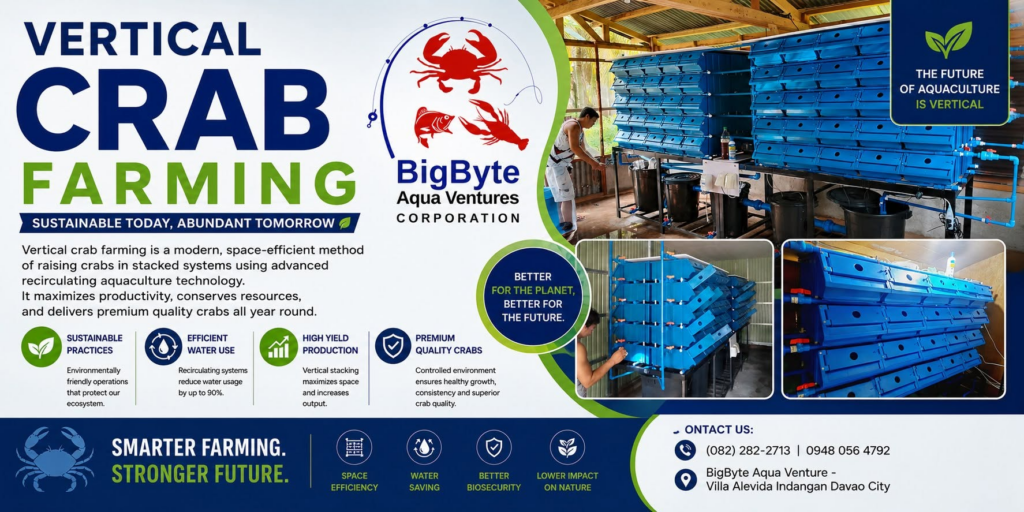
Unlike traditional pond-based farming, these systems provide greater control over growing conditions, resulting in healthier stock and more efficient resource use. Examples include recirculating aquaculture systems (RAS), indoor farming facilities, and vertical aquaculture systems.

At BigByte Aqua Ventures, controlled farming principles are reflected through innovative vertical crab farming methods that maximize production while promoting sustainability and resource efficiency. 

Conserving Water Through Smarter Farming

Water is one of the most valuable resources in aquaculture. Traditional systems often require large water exchanges, which can increase operational costs and environmental impact.

Controlled aquaculture systems address this challenge by using filtration and recirculation technologies that allow water to be cleaned and reused. Instead of constantly replacing water, farms can maintain optimal growing conditions while significantly reducing water consumption.

For example, recirculating aquaculture systems continuously filter and oxygenate water, helping maintain a healthy environment for aquatic species while conserving resources. This approach supports long-term sustainability and improves overall farm efficiency.

Reducing Waste and Improving Water Quality

One of the biggest environmental concerns in aquaculture is the management of organic waste and uneaten feed. If not properly handled, these materials can negatively affect surrounding waterways and ecosystems.

Controlled aquaculture systems help solve this problem through advanced filtration and waste management processes. Farmers can monitor water conditions more accurately and remove waste before it becomes an environmental issue.

As a result, farms can maintain cleaner water, healthier stock, and lower environmental impact. At the same time, efficient waste management improves productivity and reduces resource losses.

Protecting Natural Habitats and Marine Ecosystems

Healthy ecosystems such as mangrove forests, estuaries, and coastal wetlands play a vital role in supporting marine biodiversity. These habitats serve as breeding grounds and nurseries for countless aquatic species.

Controlled aquaculture systems help reduce the need for excessive expansion into sensitive natural areas. Because production is more efficient, farmers can produce more seafood using less space.

Vertical farming systems, such as those promoted by BigByte Aqua Ventures, demonstrate how modern aquaculture can maximize production capacity while minimizing its environmental footprint. By growing upward rather than outward, farms can increase yield without placing unnecessary pressure on surrounding habitats.

Supporting Sustainable Mud Crab Production

Mud crabs remain one of the most valuable seafood products in many parts of Southeast Asia. However, heavy dependence on wild-caught crab populations can create long-term sustainability concerns.

Organizations and aquaculture innovators are increasingly promoting controlled farming systems as a way to reduce pressure on wild crab stocks. Sustainable mud crab aquaculture can help meet market demand while protecting natural populations and preserving important coastal ecosystems.

This is one reason why companies like BigByte Aqua Ventures continue investing in modern aquaculture methods that focus on responsible production, consistent quality, and long-term sustainability.

Better Efficiency Through Vertical Aquaculture

Space limitations are a common challenge in aquaculture. Traditional pond systems often require large areas of land, which can limit expansion opportunities.

Vertical aquaculture offers a practical solution by utilizing multiple growing levels within the same footprint. This allows farmers to maximize production capacity while using less land and fewer resources.

BigByte Aqua Ventures has embraced vertical crab farming as part of its commitment to innovation and sustainable seafood production. Their approach demonstrates how controlled aquaculture systems can increase efficiency while supporting environmentally responsible farming practices.

The Future of Sustainable Seafood Farming

The future of aquaculture will depend on balancing production growth with environmental responsibility. Controlled aquaculture systems provide a pathway toward achieving this balance by improving resource efficiency, reducing waste, conserving water, and protecting natural ecosystems.

As technology continues to advance, farmers will gain access to even better tools for monitoring water quality, managing stock health, and optimizing production. These innovations will help create a more sustainable seafood industry capable of meeting growing consumer demand without compromising the environment.

Growing Sustainably with BigByte Aqua Ventures

At BigByte Aqua Ventures, we believe that sustainable aquaculture is about more than producing quality seafood. It is about creating farming systems that respect natural resources while delivering consistent value to customers and communities.

Through innovative approaches such as vertical crab farming and controlled aquaculture practices, we continue working toward a future where seafood production is both productive and environmentally responsible. Our commitment to quality, sustainability, and continuous improvement allows us to provide premium live mud crabs while supporting the long-term growth of the aquaculture industry.

Looking for a trusted source of fresh, high-quality live mud crabs raised through responsible aquaculture practices?

🌐 Website: www.bigbyteaquaventures.com
📘 Facebook: BigByte Aqua Ventures
📞 Phone: +63 948 056 4792

Contact BigByte Aqua Ventures today to learn how our commitment to controlled aquaculture systems, sustainable seafood production, and dependable service can help your business grow while contributing to a healthier future for our oceans and coastal communities.