Showing posts with label BigByte Aqua Ventures. Show all posts

Tuesday, August 4, 2026

RAS Technology for Crab Farming: The Secret to Healthier, Faster-Growing Crabs


Modern Recirculating Aquaculture System (RAS) for crab farming, featuring a filtration tank and healthy mud crab to promote faster growth and improved water quality.

RAS Technology for Crab Farming is transforming modern aquaculture by helping farmers produce healthier, faster-growing mud crabs.As the aquaculture industry continues to evolve, crab farmers are adopting innovative technologies to improve production, reduce losses, and maintain consistent product quality. One of the most effective advancements in modern aquaculture is the RAS crab farming system, which helps create a stable and controlled environment for raising mud crabs.

A recirculating aquaculture system for crabs continuously filters and reuses water, allowing farmers to maintain optimal water conditions while using significantly less water than traditional farming methods. By improving water quality and reducing environmental stress, RAS technology supports healthier crabs, better growth rates, and more efficient farm operations.

In this article, we'll explore how RAS technology works and why it is becoming an essential solution for modern crab farming in the Philippines.

What Is a RAS Crab Farming System?

A RAS crab farming system (Recirculating Aquaculture System) is a closed-loop farming method that treats, filters, and recirculates water instead of constantly replacing it. This technology uses a combination of mechanical, biological, and sometimes ultraviolet (UV) filtration to keep water clean and safe for aquatic animals.

Unlike traditional pond culture, RAS allows farmers to closely monitor and control environmental conditions, helping create a healthier habitat for mud crabs throughout their growth cycle.

How a Recirculating Aquaculture System Works

A recirculating aquaculture system for crabs continuously moves water through several treatment stages before returning it to the culture tanks.

Typical components include:

  • Mechanical filters to remove solid waste

  • Biological filters that convert harmful ammonia into less toxic compounds

  • UV sterilizers to help reduce harmful microorganisms

  • Aeration or oxygenation systems

  • Water pumps and circulation equipment

  • Monitoring devices for temperature, salinity, dissolved oxygen, and pH

This process keeps the water cleaner and more stable, reducing stress on the crabs.

Why Water Quality Is Critical in Crab Farming

Healthy mud crabs depend on clean, well-balanced water. Poor water conditions can slow growth, reduce feeding activity, and increase the risk of disease.

Effective water quality management for crabs focuses on maintaining:

  • Stable temperature

  • Proper salinity

  • Adequate dissolved oxygen

  • Balanced pH levels

  • Low ammonia and nitrite concentrations

  • Clean water with minimal organic waste

By maintaining these conditions, farmers can create an environment that supports stronger and healthier crab development.

Benefits of Healthy Crab Farming Technology

Modern healthy crab farming technology offers several advantages over traditional farming methods.

Improved Growth Performance

Stable water conditions reduce stress, allowing crabs to feed more consistently and convert nutrients more efficiently.

Higher Survival Rates

Cleaner water and improved environmental control help reduce mortality caused by poor water quality and disease outbreaks.

Better Feed Efficiency

Healthy crabs typically consume feed more effectively, reducing waste and improving overall farm productivity.

Consistent Production

Controlled farming conditions allow farmers to manage production more efficiently throughout the year, regardless of seasonal weather changes.

Reduced Environmental Impact

Because water is filtered and reused, RAS systems require less water than conventional farming methods while minimizing wastewater discharge.

Why More Farmers Are Investing in RAS

As seafood demand continues to increase, farmers are looking for technologies that improve productivity without sacrificing sustainability.

A RAS crab farming system helps farmers:

  • Produce premium-quality mud crabs

  • Reduce water consumption

  • Improve farm biosecurity

  • Monitor environmental conditions more accurately

  • Increase operational efficiency

  • Better manage intensive farming systems

These advantages make RAS an attractive investment for commercial crab farms and expanding aquaculture businesses.

Is RAS Suitable for Small and Large Farms?

One of the strengths of a recirculating aquaculture system for crabs is its flexibility. The technology can be adapted to different farm sizes depending on production goals and available resources.

RAS can be implemented in:

  • Small backyard aquaculture projects

  • Vertical crab farming systems

  • Commercial grow-out farms

  • Soft-shell crab production facilities

  • Research and hatchery operations

The system can also be expanded over time as production increases.

Advanced Aquaculture Solutions in the Philippines

The Philippine aquaculture industry is steadily adopting more sustainable and efficient farming technologies. Among the leading advanced aquaculture solutions Philippines farmers are exploring are recirculating systems, automated monitoring equipment, water filtration technologies, and vertical farming methods.

These innovations help farmers improve productivity while supporting responsible resource management and long-term business growth.

As more farms embrace modern technologies, the industry becomes better equipped to meet the increasing demand for high-quality seafood in local and international markets.

Best Practices for Maximizing RAS Performance

To get the most from a RAS crab farming system, farmers should:

  • Monitor water quality daily.

  • Maintain filtration equipment regularly.

  • Feed crabs according to recommended schedules.

  • Avoid overcrowding culture tanks.

  • Inspect pumps, aerators, and backup systems frequently.

  • Keep accurate records of water parameters and crab performance.

  • Train staff on proper system operation and maintenance.

Consistent management helps ensure the system operates efficiently and supports healthy crab production.

Conclusion

RAS Technology for Crab Farming is one of the most effective solutions for producing healthier and faster-growing mud crabs. By improving water quality, reducing disease risks, and increasing production efficiency, farmers can achieve better yields while promoting sustainable aquaculture practices.

Whether you are starting a new crab farm or upgrading an existing operation, investing in RAS Technology for Crab Farming can help improve productivity and long-term profitability. With proper management and modern equipment, RAS provides a reliable path toward successful crab farming in the Philippines.

Ready to Learn More?

If you're interested in vertical crab farming in Davao or want to learn more about modern crab farming systems, BigByte Aqua Ventures is here to help. Whether you're planning to start a crab farm, upgrade your current setup, or join a crab farming seminar, our team is ready to assist you.

Check out the latest seminar schedule on BigByte Aqua Ventures or get in touch with our team directly.

🌐 Website: www.bigbyteaquaventures.com
📘 Facebook: BigByte Aqua Ventures
📞 Phone: +63 948 056 4792




Sunday, August 2, 2026

Why More Davao Farmers Are Switching to Vertical Crab Farming


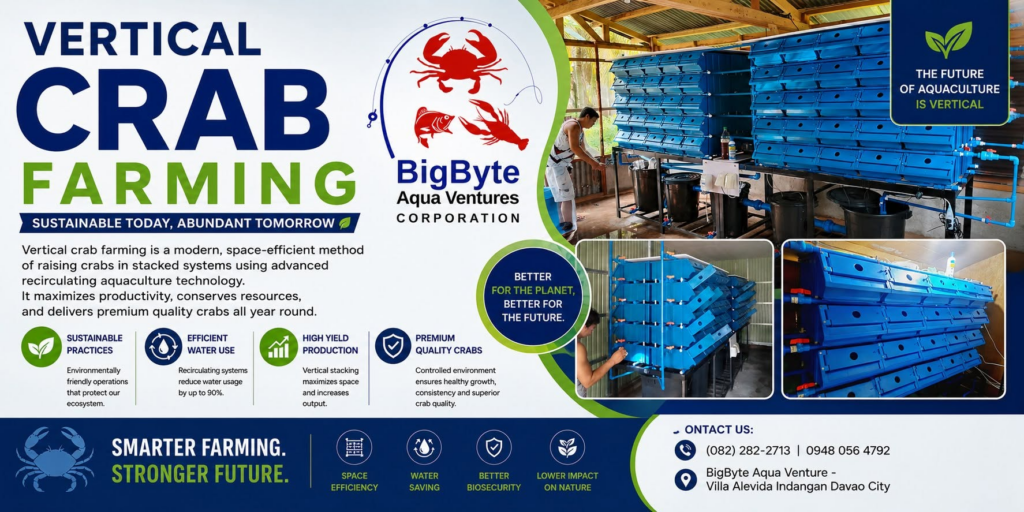
Crab farming has become one of the fastest-growing aquaculture industries in the Philippines, especially in coastal regions like Davao. As the demand for high-quality mud crabs continues to rise, many farmers are searching for smarter and more efficient ways to increase production without expanding their farms. One innovation that is rapidly gaining attention is vertical crab farming in Davao.

Unlike traditional pond-based farming, vertical farming uses stacked containers or multi-level culture systems that maximize available space while improving management and productivity. This modern crab farming system allows farmers to produce more crabs in a smaller area while reducing common challenges such as cannibalism and water quality issues.

In this article, we'll explore why more Davao farmers are embracing vertical crab farming and how this innovative approach is shaping the future of aquaculture in the Philippines.


What Is Vertical Crab Farming?

Vertical crab farming is an aquaculture technique that raises crabs in stacked or tiered culture units instead of relying solely on large ponds. Each crab is typically housed individually or in separated compartments, allowing better monitoring, feeding, and disease control.

This vertical aquaculture system is designed to optimize both land and water resources, making it an excellent option for commercial farms and small-scale entrepreneurs alike.


Why Davao Farmers Are Making the Switch

Maximizes Limited Farm Space

One of the biggest advantages of a space-saving crab farming setup is the ability to increase production without purchasing additional land.

By utilizing vertical racks or stacked grow-out systems, farmers can raise significantly more crabs within the same footprint compared to conventional pond culture.

Benefits include:

  • Higher stocking capacity

  • Better land utilization

  • Increased production per square meter

  • Easier farm expansion


Reduces Crab Cannibalism

Mud crabs naturally become aggressive, especially during molting periods. Traditional pond systems often experience losses because larger crabs attack smaller or weaker ones.

Vertical systems minimize this problem by separating individual crabs into separate compartments.

As a result, farmers benefit from:

  • Higher survival rates

  • More consistent harvest sizes

  • Lower production losses

  • Better overall profitability


Easier Feeding and Daily Monitoring

Managing hundreds or even thousands of crabs becomes much simpler in a modern crab farming system.

Farmers can quickly inspect:

  • Feeding behavior

  • Molting activity

  • Growth performance

  • Signs of disease or stress

This daily monitoring allows problems to be detected early before they spread throughout the farm.


Improved Water Management

Water quality is one of the most important factors in successful crab farming.

Vertical farming systems often integrate:

  • Mechanical filtration

  • Biological filtration

  • UV sterilization

  • Water circulation pumps

  • Oxygen monitoring

Maintaining stable water conditions helps reduce stress and promotes faster growth.


Higher Production Efficiency

Many Davao farmers are choosing vertical crab farming in Davao because it increases production efficiency while lowering operational waste.

With organized culture systems, farmers can:

  • Feed more accurately

  • Reduce feed waste

  • Save labor

  • Improve harvest planning

  • Maintain consistent production schedules

This leads to better returns on investment over time.


Is Vertical Crab Farming the Best Method in the Philippines?

There is no single farming technique that fits every situation. However, many aquaculture experts consider vertical farming among the best crab farming methods in the Philippines, particularly for intensive production.

It works especially well for:

  • Commercial crab farms

  • Soft-shell crab production

  • Hatchery grow-out systems

  • Research facilities

  • Farms with limited land area

Success still depends on proper farm management, water quality, nutrition, and regular monitoring

Challenges to Consider

Although vertical farming offers many advantages, farmers should also prepare for several challenges.

Initial investment may include:

  • Culture tanks

  • Vertical racks

  • Water pumps

  • Filtration systems

  • Aeration equipment

  • Backup power supply

Proper training is also important to ensure the system operates efficiently.


Why Vertical Farming Fits Davao

Davao continues to grow as an important aquaculture hub due to its strategic coastal location, expanding seafood market, and increasing support for sustainable farming practices.

As land becomes more valuable and production costs continue to rise, efficient farming technologies become even more important.

A vertical aquaculture system allows local farmers to increase production while making better use of available resources, making it an attractive long-term investment.


Final Thoughts

The future of crab farming is shifting toward smarter, more efficient production methods. From maximizing limited space to improving survival rates and simplifying farm management, vertical crab farming in Davao is helping farmers produce more while using fewer resources.

For anyone planning to invest in aquaculture or upgrade an existing operation, adopting a modern crab farming system can provide a competitive advantage in today's growing seafood industry. With proper planning, quality equipment, and effective management, vertical farming has the potential to become one of the best crab farming methods in the Philippines for sustainable and profitable crab production.


Ready to Learn More?

If you're interested in vertical crab farming in Davao or want to learn more about modern crab farming systems, BigByte Aqua Ventures is here to help. Whether you're planning to start a crab farm, upgrade your current setup, or join a crab farming seminar, our team is ready to assist you.

Check out the latest seminar schedule on BigByte Aqua Ventures or get in touch with our team directly.

🌐 Website: www.bigbyteaquaventures.com
📘 Facebook: BigByte Aqua Ventures
📞 Phone: +63 948 056 4792

Monday, July 6, 2026

The Environmental Benefits of Controlled Aquaculture System

Controlled Aquaculture Systems


As the global demand for seafood continues to grow, producers face an important challenge: how can we increase seafood production without placing additional pressure on the environment?

Traditional fishing methods and poorly managed aquaculture operations can contribute to habitat degradation, water pollution, and the depletion of natural resources. Because of this, many seafood producers are turning to controlled aquaculture systems as a more sustainable way to meet market demand.

Controlled aquaculture systems allow farmers to closely manage water quality, feeding schedules, oxygen levels, and animal health. By creating a stable and carefully monitored environment, these systems can produce high-quality seafood while reducing environmental impact. This approach aligns with the growing shift toward sustainable aquaculture practices worldwide.

What Are Controlled Aquaculture Systems?

Controlled aquaculture systems are farming environments where important factors such as water circulation, temperature, stocking density, and waste management are carefully monitored and managed.

Unlike traditional pond-based farming, these systems provide greater control over growing conditions, resulting in healthier stock and more efficient resource use. Examples include recirculating aquaculture systems (RAS), indoor farming facilities, and vertical aquaculture systems.

At BigByte Aqua Ventures, controlled farming principles are reflected through innovative vertical crab farming methods that maximize production while promoting sustainability and resource efficiency. 

Conserving Water Through Smarter Farming

Water is one of the most valuable resources in aquaculture. Traditional systems often require large water exchanges, which can increase operational costs and environmental impact.

Controlled aquaculture systems address this challenge by using filtration and recirculation technologies that allow water to be cleaned and reused. Instead of constantly replacing water, farms can maintain optimal growing conditions while significantly reducing water consumption.

For example, recirculating aquaculture systems continuously filter and oxygenate water, helping maintain a healthy environment for aquatic species while conserving resources. This approach supports long-term sustainability and improves overall farm efficiency.

Reducing Waste and Improving Water Quality

One of the biggest environmental concerns in aquaculture is the management of organic waste and uneaten feed. If not properly handled, these materials can negatively affect surrounding waterways and ecosystems.

Controlled aquaculture systems help solve this problem through advanced filtration and waste management processes. Farmers can monitor water conditions more accurately and remove waste before it becomes an environmental issue.

As a result, farms can maintain cleaner water, healthier stock, and lower environmental impact. At the same time, efficient waste management improves productivity and reduces resource losses.

Protecting Natural Habitats and Marine Ecosystems

Healthy ecosystems such as mangrove forests, estuaries, and coastal wetlands play a vital role in supporting marine biodiversity. These habitats serve as breeding grounds and nurseries for countless aquatic species.

Controlled aquaculture systems help reduce the need for excessive expansion into sensitive natural areas. Because production is more efficient, farmers can produce more seafood using less space.

Vertical farming systems, such as those promoted by BigByte Aqua Ventures, demonstrate how modern aquaculture can maximize production capacity while minimizing its environmental footprint. By growing upward rather than outward, farms can increase yield without placing unnecessary pressure on surrounding habitats.

Supporting Sustainable Mud Crab Production

Mud crabs remain one of the most valuable seafood products in many parts of Southeast Asia. However, heavy dependence on wild-caught crab populations can create long-term sustainability concerns.

Organizations and aquaculture innovators are increasingly promoting controlled farming systems as a way to reduce pressure on wild crab stocks. Sustainable mud crab aquaculture can help meet market demand while protecting natural populations and preserving important coastal ecosystems.

This is one reason why companies like BigByte Aqua Ventures continue investing in modern aquaculture methods that focus on responsible production, consistent quality, and long-term sustainability.

Better Efficiency Through Vertical Aquaculture

Space limitations are a common challenge in aquaculture. Traditional pond systems often require large areas of land, which can limit expansion opportunities.

Vertical aquaculture offers a practical solution by utilizing multiple growing levels within the same footprint. This allows farmers to maximize production capacity while using less land and fewer resources.

BigByte Aqua Ventures has embraced vertical crab farming as part of its commitment to innovation and sustainable seafood production. Their approach demonstrates how controlled aquaculture systems can increase efficiency while supporting environmentally responsible farming practices.

The Future of Sustainable Seafood Farming

The future of aquaculture will depend on balancing production growth with environmental responsibility. Controlled aquaculture systems provide a pathway toward achieving this balance by improving resource efficiency, reducing waste, conserving water, and protecting natural ecosystems.

As technology continues to advance, farmers will gain access to even better tools for monitoring water quality, managing stock health, and optimizing production. These innovations will help create a more sustainable seafood industry capable of meeting growing consumer demand without compromising the environment.

Growing Sustainably with BigByte Aqua Ventures

At BigByte Aqua Ventures, we believe that sustainable aquaculture is about more than producing quality seafood. It is about creating farming systems that respect natural resources while delivering consistent value to customers and communities.

Through innovative approaches such as vertical crab farming and controlled aquaculture practices, we continue working toward a future where seafood production is both productive and environmentally responsible. Our commitment to quality, sustainability, and continuous improvement allows us to provide premium live mud crabs while supporting the long-term growth of the aquaculture industry.

Looking for a trusted source of fresh, high-quality live mud crabs raised through responsible aquaculture practices?

🌐 Website: www.bigbyteaquaventures.com
📘 Facebook: BigByte Aqua Ventures
📞 Phone: +63 948 056 4792

Contact BigByte Aqua Ventures today to learn how our commitment to controlled aquaculture systems, sustainable seafood production, and dependable service can help your business grow while contributing to a healthier future for our oceans and coastal communities.


Wednesday, June 17, 2026

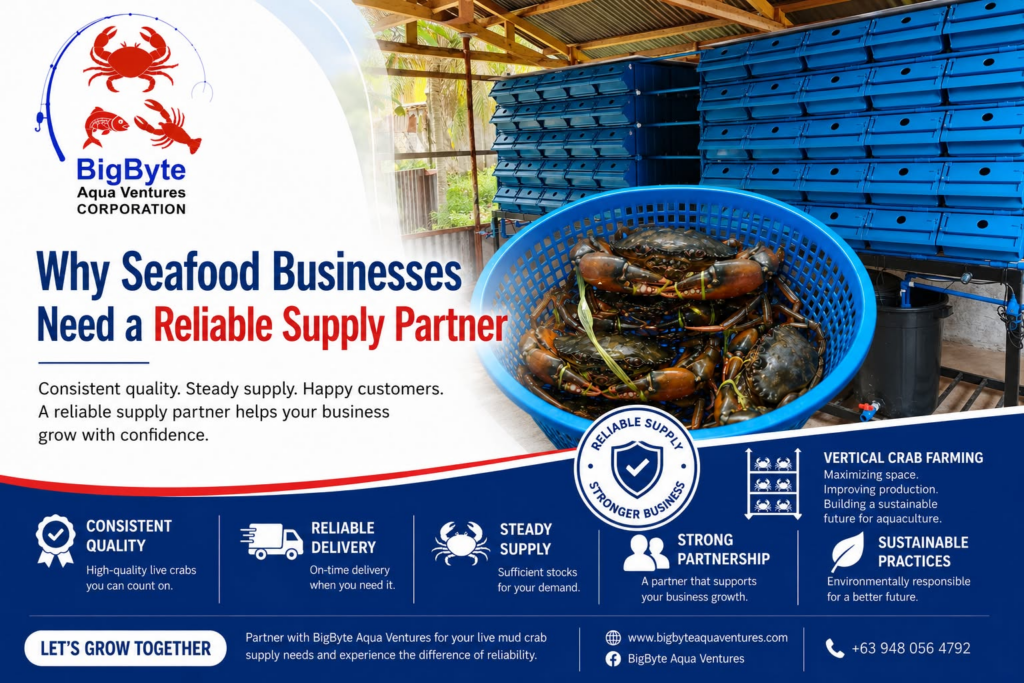
Why Seafood Businesses Need a Reliable Supply Partner

Why Seafood Businesses Need a Reliable Supply Partner


BigByte Aqua Ventures - Your reliable seafood supply partner for live mud crabs


Running a seafood business isn't just about selling great products—it's about making sure those products are available when your customers need them. Finding a reliable seafood supply partner can make a huge difference in your day-to-day operations.

When customers order seafood, they expect freshness, quality, and consistency. If you're unable to meet those expectations because of supply shortages or inconsistent product quality, it can affect customer trust and ultimately impact your business. That's why choosing the right supply partner is one of the most important decisions a seafood business can make.

The Importance of Consistent Quality

In the seafood industry, quality matters. Customers can quickly tell the difference between fresh, well-handled seafood and products that have not been properly cared for.

Working with a trusted mud crabs supplier helps ensure that every order meets the standards your customers expect. Consistent quality not only keeps customers satisfied but also helps strengthen your reputation in a competitive market.

At BigByte Aqua Ventures, we understand that businesses rely on quality products to keep customers coming back. That’s why we focus on responsible farming practices and careful handling from farm to delivery.

Keeping Up With Customer Demand

Every seafood business experiences busy periods. Holidays, special occasions, weekends, and local events can all increase customer demand.

Imagine having customers ready to buy but not having enough products to sell. Situations like these can lead to missed opportunities and disappointed customers.

Having a reliable crab source gives businesses peace of mind, knowing they can continue serving customers even during peak seasons. A dependable supplier helps ensure that products are available when they're needed most.

Fresh Seafood Starts With a Reliable Seafood Supply Partner

Freshness is one of the biggest factors customers consider when buying seafood. Whether it's a restaurant serving signature seafood dishes or a retailer selling live crabs, product quality depends heavily on how the seafood is sourced and delivered.

A dependable wholesale live crabs supplier helps maintain that freshness by ensuring products are properly farmed, handled, and transported. This allows businesses to confidently offer seafood that meets customer expectations.

More Than Just a Supplier

The best business relationships go beyond simple transactions. A good supplier becomes a partner who understands your needs and supports your growth.

When you work with a trusted supplier, you gain benefits such as:

  • Consistent product availability
  • Reliable delivery schedules
  • Better inventory planning
  • Reduced supply-related stress
  • Greater confidence during high-demand periods

These advantages allow business owners to focus on serving customers and growing their operations instead of constantly worrying about where their next shipment will come from.

Supporting Sustainable Seafood Practices

Today's consumers are becoming more aware of where their food comes from. Many prefer seafood that is produced through responsible and sustainable practices.

By partnering with suppliers that prioritize sustainable aquaculture, businesses can provide customers with products they can feel good about purchasing. Sustainable farming practices also help ensure the long-term availability of quality seafood for future generations.

At BigByte Aqua Ventures, sustainability is at the heart of what we do. Our farming methods are designed to support healthy production while maintaining responsible aquaculture practices.

Building a Stronger Seafood Business with a Reliable Supply Partner

Success in the seafood industry often comes down to finding a reliable seafood supply partner. Customers want to know that your products will be available, fresh, and consistent every time they place an order.

A successful seafood business needs more than quality products—it needs a dependable supply chain behind it. Choosing the right supplier can help ensure consistent quality, reliable deliveries, and greater confidence in meeting customer demand.  

At BigByte Aqua Ventures  we take pride i n supporting seafood businesses with fresh, high-quality live mud crabs and dependable service. Whether you’re restaurant owner, seafood retailer, reseller, or distributor, we’re committed to helping you secure a reliable source of premium seafood products.

As your business grows, having the right supply partner can make all the difference.

Looking for a trusted source of fresh live mud crabs?

🌐 Website: www.bigbyteaquaventures.com
📘 Facebook: BigByte Aqua Ventures
📞 Phone: +63 948 056 4792

Contact BigByte Aqua Ventures today and discover how a reliable supply partnership can help your seafood business grow and keep your customers coming back for more.